What Can and Can’t Go in a Dumpster?
Accepted items, prohibited materials, and Charlotte-area disposal rules
In This Guide
Americans generated 292.4 million tons of municipal solid waste in 2022, plus another 600 million tons of construction and demolition debris on top of that (EPA, 2024). When you rent a roll-off dumpster for a home renovation, cleanout, or construction project, knowing what’s allowed matters more than most people think. Loading prohibited items can lead to rejected loads, extra fees, or fines up to $25,000 in North Carolina.
This guide covers exactly what’s accepted in a rental dumpster, what’s banned, and which items fall into a gray area. We’ll include Charlotte-specific disposal rules and local options for anything that can’t go in the container.
What Can You Put in a Dumpster?
Here’s the good news: most of what you’ll generate during a typical home project goes right in the dumpster. The EPA estimates that over 76% of construction and demolition waste is recyclable or recoverable (EPA, 2024), and standard roll-off containers accept the vast majority of residential and construction materials.
Here’s what’s fair game:
Household Junk and General Debris
- Old furniture: couches, tables, chairs, desks, bookshelves
- Clothing, bedding, linens, and textiles
- Books, papers, and cardboard boxes
- Plastic bins, storage containers, toys
- Kitchen and bathroom fixtures (sinks, toilets, bathtubs)
Construction and Renovation Debris
- Drywall and sheetrock
- Lumber, plywood, and wood scraps
- Asphalt roofing shingles
- Vinyl and laminate flooring
- Ceramic tile, porcelain, brick, concrete, and stone
- Windows, doors, nails, screws, and hardware
Yard Waste
- Branches, limbs, and brush (cut to fit)
- Grass clippings, leaves, and shrub trimmings
- Garden debris, dead plants, and clean sod
Appliances (Without Refrigerant)
- Washers, dryers, dishwashers
- Stoves, ovens, ranges, microwaves
- Water heaters (drained)
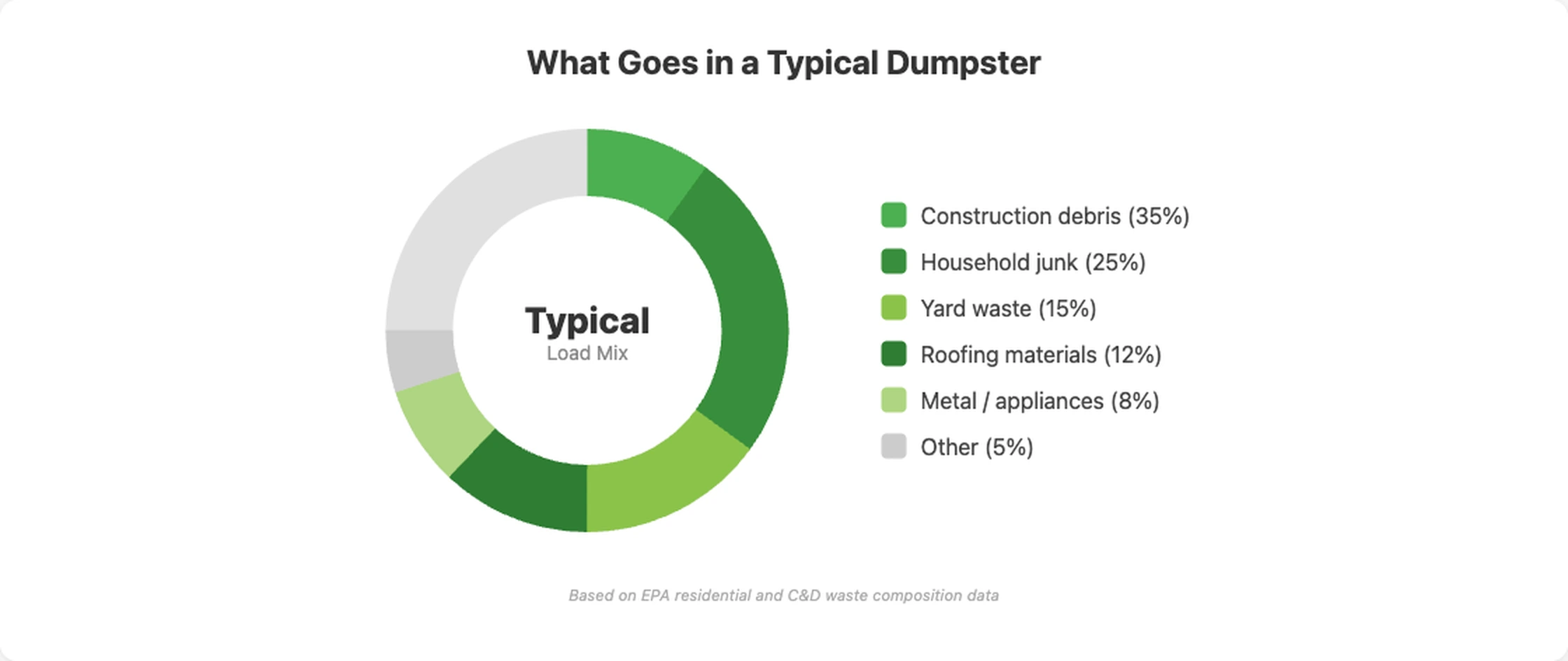
For most Charlotte-area projects, whether it’s a kitchen remodel, estate cleanout, or roof tear-off, everything you’re removing fits the “accepted” category. The key is matching the right dumpster size to your project so you don’t exceed weight limits with heavy materials.
Items Prohibited from Dumpsters
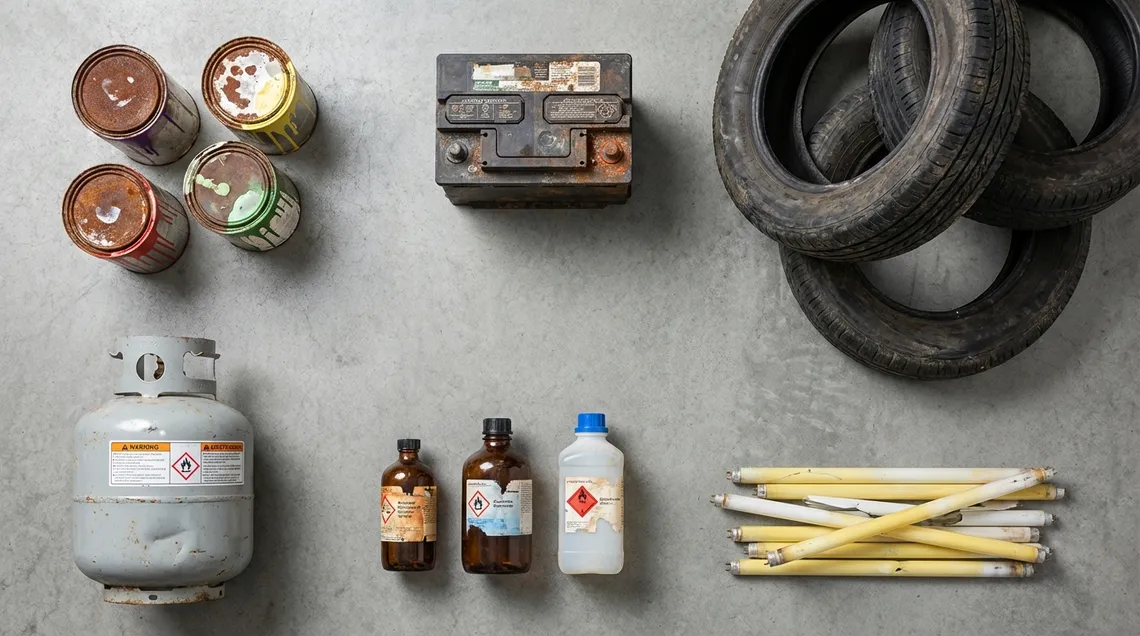
While the accepted list is long, certain materials are banned from roll-off dumpsters everywhere. These restrictions aren’t unique to Rapid Haul. They apply industry-wide because of the environmental, health, and safety risks these items pose at landfills.
Hazardous Chemicals and Liquids
- Paints, stains, lacquers, and solvents
- Pesticides, herbicides, and fertilizers
- Motor oil, antifreeze, and transmission fluid
- Cleaning chemicals and pool chemicals
- Any container holding liquid residue
Batteries and Pressurized Containers
- Car batteries (lead-acid) and lithium-ion batteries
- Propane tanks and compressed gas cylinders
- Non-empty aerosol cans and fire extinguishers
Other Banned Items
- Tires (with or without rims)
- Asbestos-containing materials
- Medical waste and sharps
- Railroad ties (creosote-treated)
- Fluorescent tubes and bulbs (contain mercury)
- Refrigerators, freezers, and AC units (contain refrigerant)
About 25% of waste loads arrive at processing facilities with some level of contamination from prohibited items (EPA, 2023). That contamination costs the waste industry roughly $1 billion per year (SWANA) and often results in surcharges passed to the customer. We’ll work with you to identify anything that shouldn’t go in before you start loading, so there aren’t surprises at pickup.
Gray Area Items: It Depends
Some borderline items are easier to deal with through full-service junk removal than a roll-off, especially single appliances or one-off bulky pieces. See our cost comparison: junk removal vs. dumpster rental in Charlotte. Not sure which size to order? Compare them in our 15 vs 20 vs 30-yard dumpster guide.
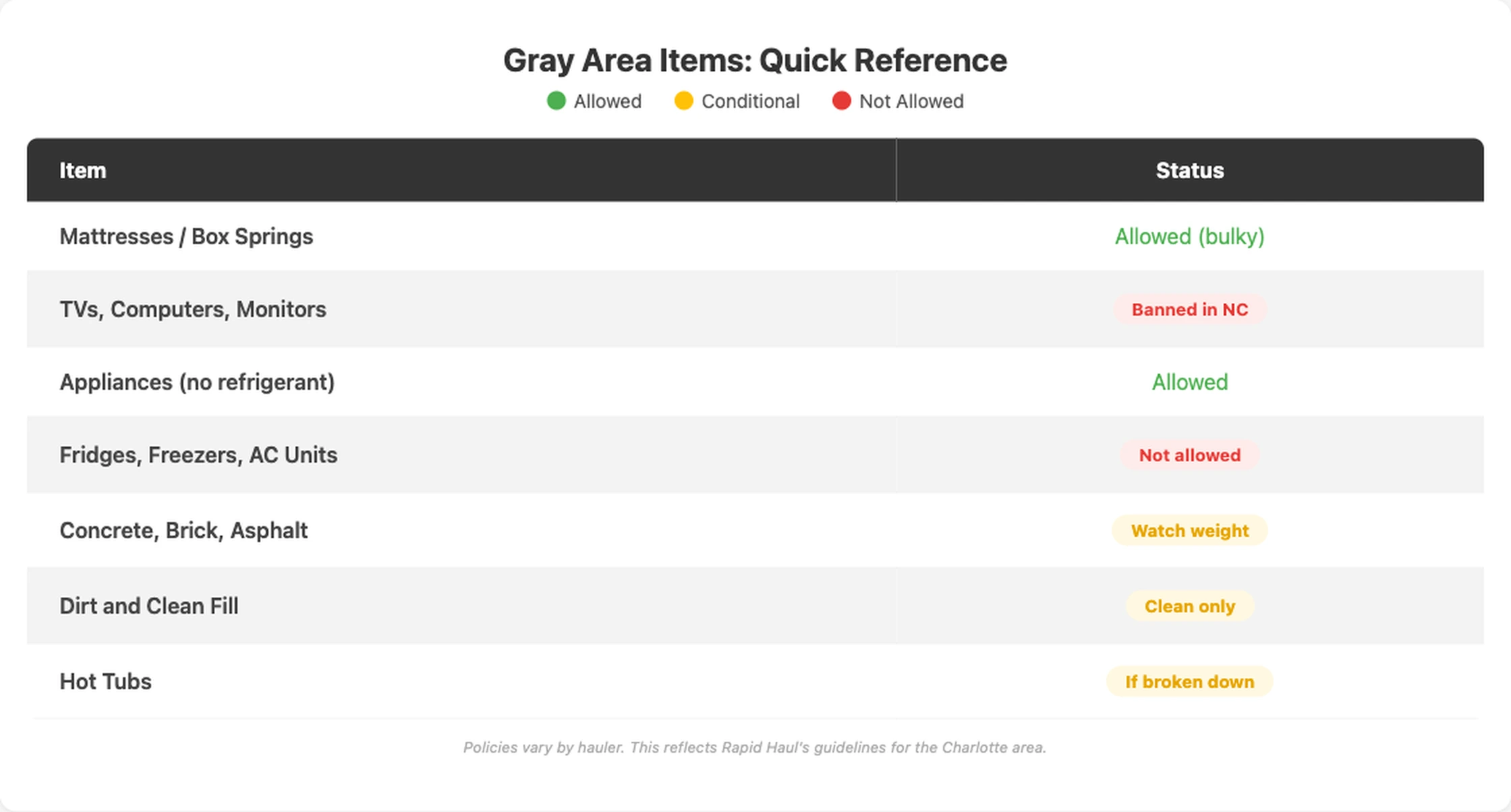
Some items aren’t clearly on the “yes” or “no” list. Whether they’re accepted depends on your location, your hauler’s policies, and sometimes the item’s condition.
Mattresses and Box Springs
Most dumpster companies accept mattresses, and if the mattress is the only thing you are getting rid of there are cheaper Charlotte options than a dumpster. They’re bulky relative to their weight, so keep that in mind when choosing a container. A king-size mattress fills roughly 2 cubic yards of space. If you’re clearing out a whole house, factor mattresses into your size estimate.
Electronics
North Carolina law bans TVs and computer monitors from landfills (NCDEQ). Mecklenburg County accepts these at drop-off recycling centers for free. Smaller electronics like toasters, radios, and small kitchen gadgets? Those are generally fine in the dumpster.
Appliances with Refrigerant
Fridges, freezers, window AC units, and dehumidifiers contain refrigerant that must be professionally removed before disposal. The Clean Air Act (Section 608) prohibits venting refrigerant, so these can’t go in a dumpster with the refrigerant still inside.
Concrete, Brick, and Heavy Debris
These materials are allowed but extremely heavy. A single cubic yard of concrete weighs about 2,000 lbs. Our 15-yard dumpster includes 1.5 tons (3,000 lbs) of weight, so just two cubic yards of concrete would max it out. For heavy debris, size up to get a higher weight allowance.
Dirt and Clean Fill
Clean dirt without contamination is generally accepted. Soil that’s been exposed to oil, chemicals, or fuel is not. If you’re doing excavation work, let us know what you’re digging up and we’ll advise on the best approach.
Hot Tubs
Hot tub shells are accepted if you break them into pieces that fit inside the container. Drain all water first. The pump and motor can go in too.
Charlotte and Mecklenburg County Disposal Rules
North Carolina has disposal regulations that go beyond the general dumpster rules most people know. Understanding these can save you from fines and help you properly dispose of anything that can’t go in the container.
NC Illegal Dumping Penalties
Illegal dumping in North Carolina carries fines up to $25,000 per day per violation under NCGS 130A-309.11. That includes placing prohibited materials in a roll-off container that gets hauled to a landfill. It’s not just a hauler policy. It’s state law.
Mecklenburg County Hazardous Waste Drop-Off
Mecklenburg County residents can drop off household hazardous waste for free at:
- Foxhole Recycling Center – 7817 Foxhole Rd, Charlotte, NC 28215
- Metrolina Greenhouses Drop-Off – Call 311 for current schedule and locations
Accepted items include paint, batteries, motor oil, antifreeze, pesticides, fluorescent bulbs, and electronics. There’s no charge for Mecklenburg County residents.
Electronics Recycling in NC
State law bans computers, TVs, and monitors from landfills. Mecklenburg County accepts these at drop-off centers and through periodic collection events. Check MeckNC.gov or call 311 for the latest schedule.
Not sure whether something from your project is allowed? The simplest move is to call us at 833-DUMP-365 before you start loading. We handle hundreds of rentals across Charlotte, Gastonia, Concord, Huntersville, and 30 other cities in the region. We’ve seen just about everything.
Not Sure What’s Allowed? Just Ask.
Call or text us your item list and we’ll tell you exactly what can go in and what needs special handling.
Or call 833-DUMP-365 for a quick answer
How to Avoid Overweight and Overfill Fees
Even when every item in your dumpster is accepted, you can still face extra charges if you exceed the weight limit or load above the fill line. According to industry data, roughly 15% to 20% of residential dumpster rentals incur some type of overage fee (HomeAdvisor, 2025). A little planning prevents that.
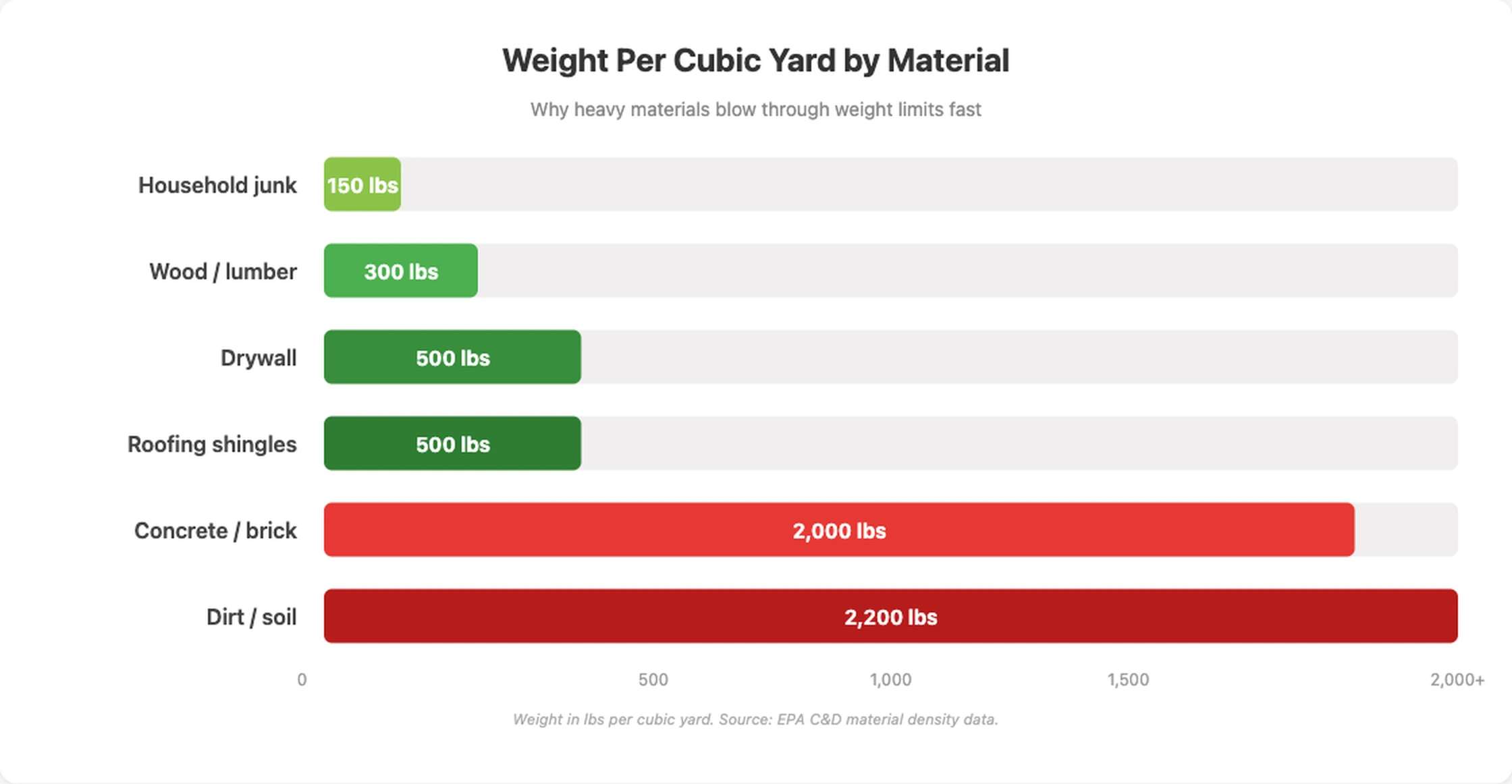
That chart tells the story. A 15-yard dumpster full of household junk weighs around 2,250 lbs, well within the 3,000 lb allowance. Fill that same container with concrete and you’re looking at 30,000 lbs, ten times over. Here’s how Rapid Haul’s weight allowances break down:
| Dumpster Size | Weight Included | Overage Rate |
|---|---|---|
| 15-Yard | 1.5 tons (3,000 lbs) | $100/ton |
| 20-Yard | 2 tons (4,000 lbs) | $100/ton |
| 30-Yard | 3 tons (6,000 lbs) | $100/ton |
| 40-Yard | 4 tons (8,000 lbs) | $100/ton |
Tips for Staying in Budget
- Mix heavy and light materials when possible to balance the load
- Break down large items (furniture, shelving, hot tubs) to maximize space
- Place flat items like plywood and drywall against the walls first
- Fill gaps with smaller debris as you load
- Size up for heavy projects. A 20-yard container with 4,000 lbs of capacity costs less than a smaller container with overweight fees
Need help figuring out the right size? Our pricing guide breaks down what’s included at every size, and our size guide helps you estimate based on your project type.
Frequently Asked Questions
Can you put furniture in a dumpster?
Yes. Wooden and upholstered furniture like couches, tables, chairs, dressers, and bookshelves are all accepted in Rapid Haul dumpsters. Break down larger pieces when possible to maximize your space. A typical living room set fills about 5 to 8 cubic yards, so a 15-yard dumpster handles most furniture cleanouts with room to spare.
Can you put appliances in a dumpster?
Most appliances are accepted, including washers, dryers, dishwashers, stoves, and microwaves. The exception is anything containing refrigerant: refrigerators, freezers, window AC units, and dehumidifiers. Federal law under the Clean Air Act requires professional freon removal before these can be disposed of. Your local HVAC company can handle the removal for $50 to $150.
Can I put a mattress in a dumpster?
Yes. Mattresses and box springs are allowed in Rapid Haul dumpsters. Keep in mind that a king-size mattress takes up about 2 cubic yards of space. If you’re clearing out a whole house with multiple mattresses, consider sizing up your container. Our size guide can help you estimate the right fit for a full cleanout.
What happens if I put prohibited items in a dumpster?
If our team finds prohibited items during pickup, we may need to have them removed before we can haul the container. This can delay your pickup and may result in an extra trip fee. In serious cases involving hazardous waste or asbestos, disposal facilities can reject the entire load. North Carolina fines for illegal dumping can reach $25,000 per day. The easiest fix: call 833-DUMP-365 before loading if you’re unsure.
Can you put concrete or dirt in a dumpster?
Yes, but weight is the primary concern. Concrete weighs roughly 2,000 lbs per cubic yard, meaning a 15-yard container full of concrete would far exceed its weight limit. For heavy materials like concrete, brick, or soil, we recommend our 20-yard or larger containers to get a higher weight allowance. Call us with your project details and we’ll recommend the best size to avoid overage fees.
The Bottom Line
Most items from a home renovation, cleanout, or construction project go right in a roll-off dumpster without any issues. Household junk, furniture, construction debris, roofing materials, and yard waste are all accepted. The short list of prohibited items, mainly hazardous chemicals, batteries, tires, and refrigerant-containing appliances, all have safe local alternatives through Mecklenburg County’s free drop-off programs.
Here’s the quick version:
- Allowed: Furniture, construction debris, yard waste, most appliances, roofing, drywall
- Prohibited: Paint, batteries, tires, propane, asbestos, refrigerant appliances, medical waste
- Gray area: Mattresses (yes), electronics (check NC rules), concrete (watch weight)
When in doubt, the fastest answer is a quick phone call. We handle dumpster rentals across 34 cities in the Charlotte metro and can tell you in 30 seconds whether your items are good to go.
Planning your project? Start with our dumpster size guide to pick the right container, then check our Charlotte pricing breakdown to see exactly what’s included.
Ready to Book Your Dumpster?
Flat-rate pricing from $400. Same-day delivery across the Greater Charlotte area. No hidden fees, ever.
Or call 833-DUMP-365 to talk to a real person
Clearing an entire home raises more questions than a single load does. Our estate cleanout checklist for Charlotte walks the whole process, from the clerk of superior court through the last trip to the county center.